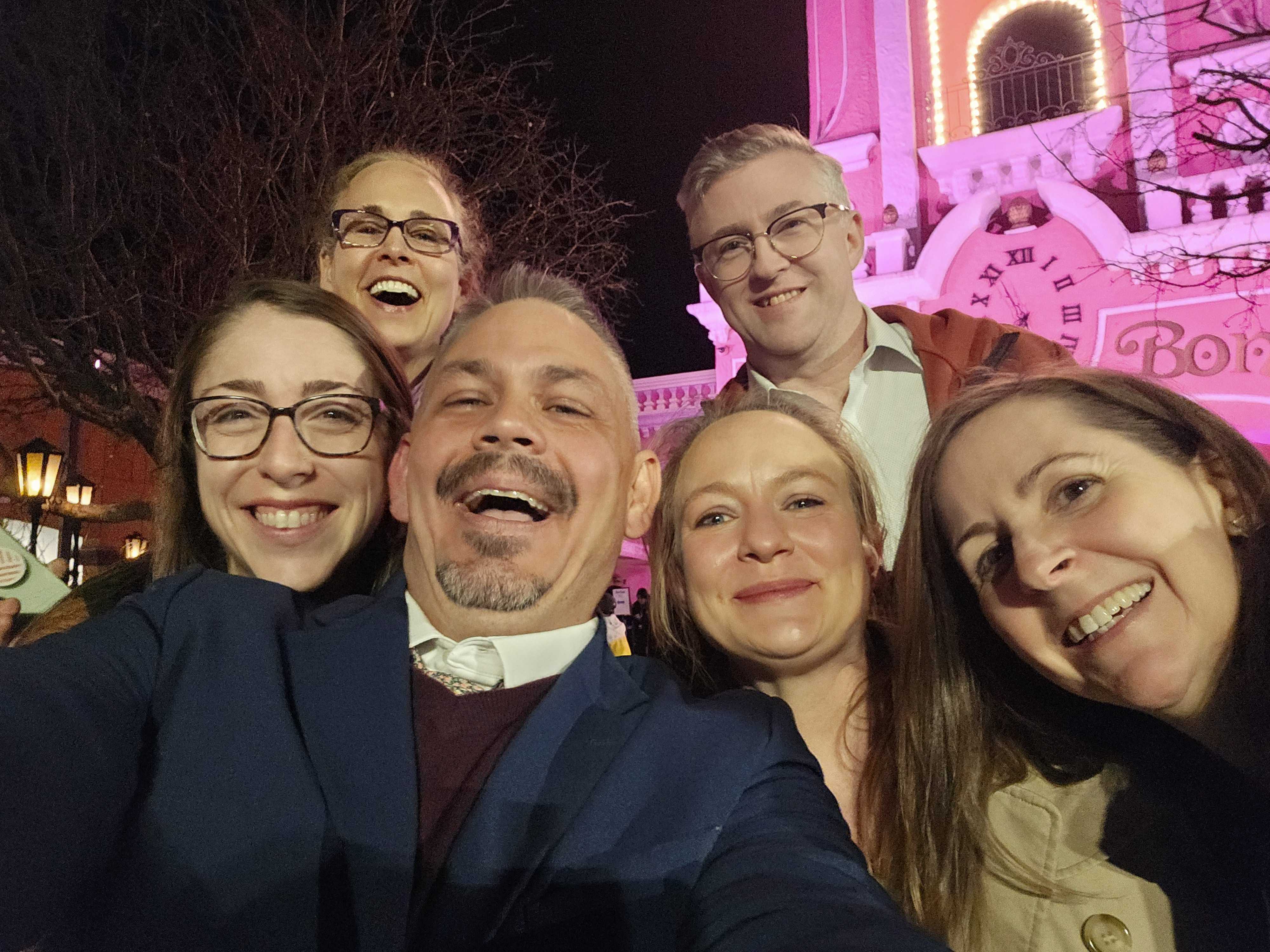
It’s a cold, dark time in the Northern Hemisphere, but I’ve been immeasurably cheered in recent weeks by the opportunity to spend time with my CLIR community in person: first in Denver for DLF (where we took a memorable staff trip to Casa Bonita), then in Baltimore at the Association of Moving Image Archivists conference, and just last week, here in D.C. for our annual staff holiday lunch and winter reception.
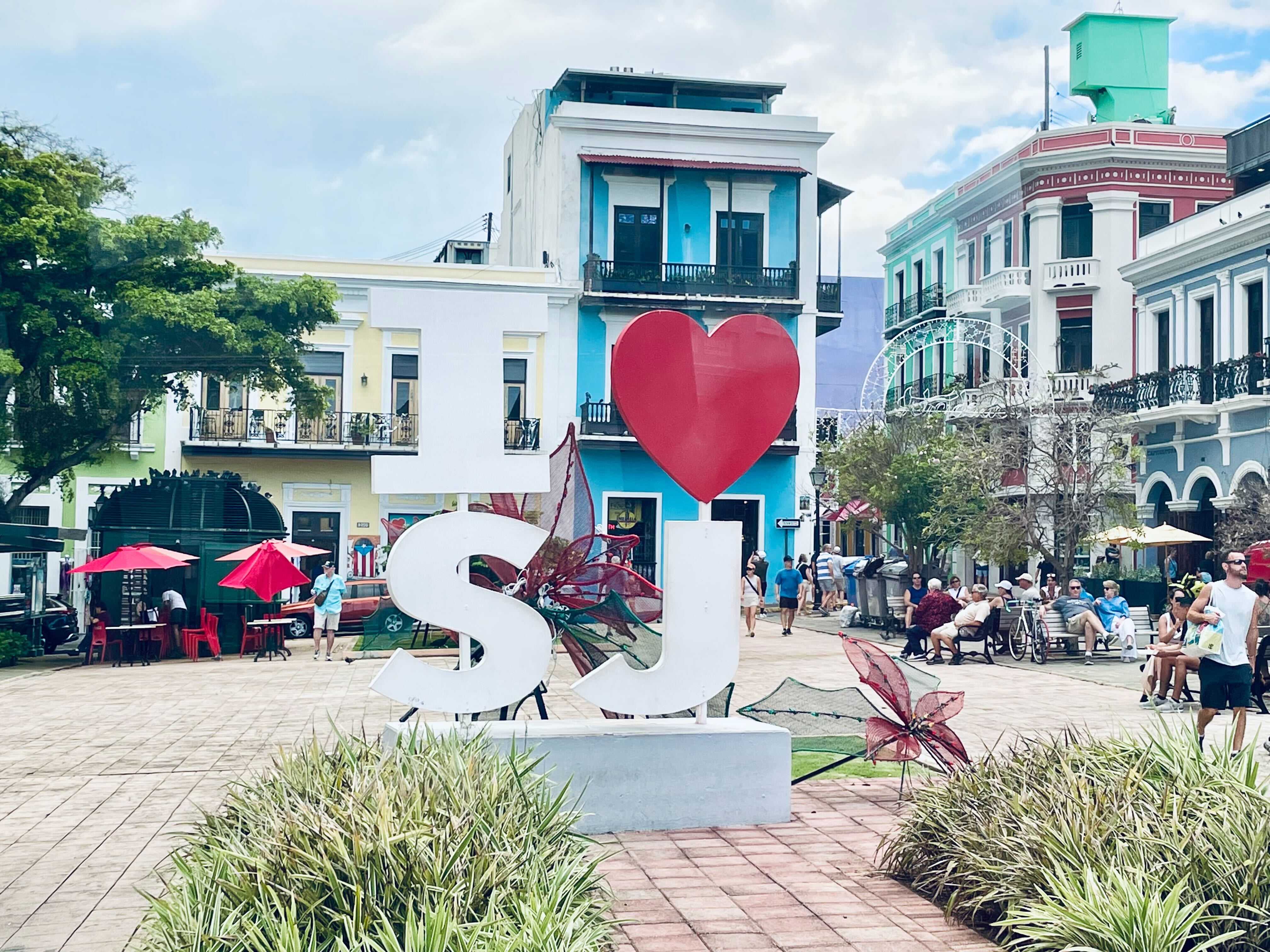
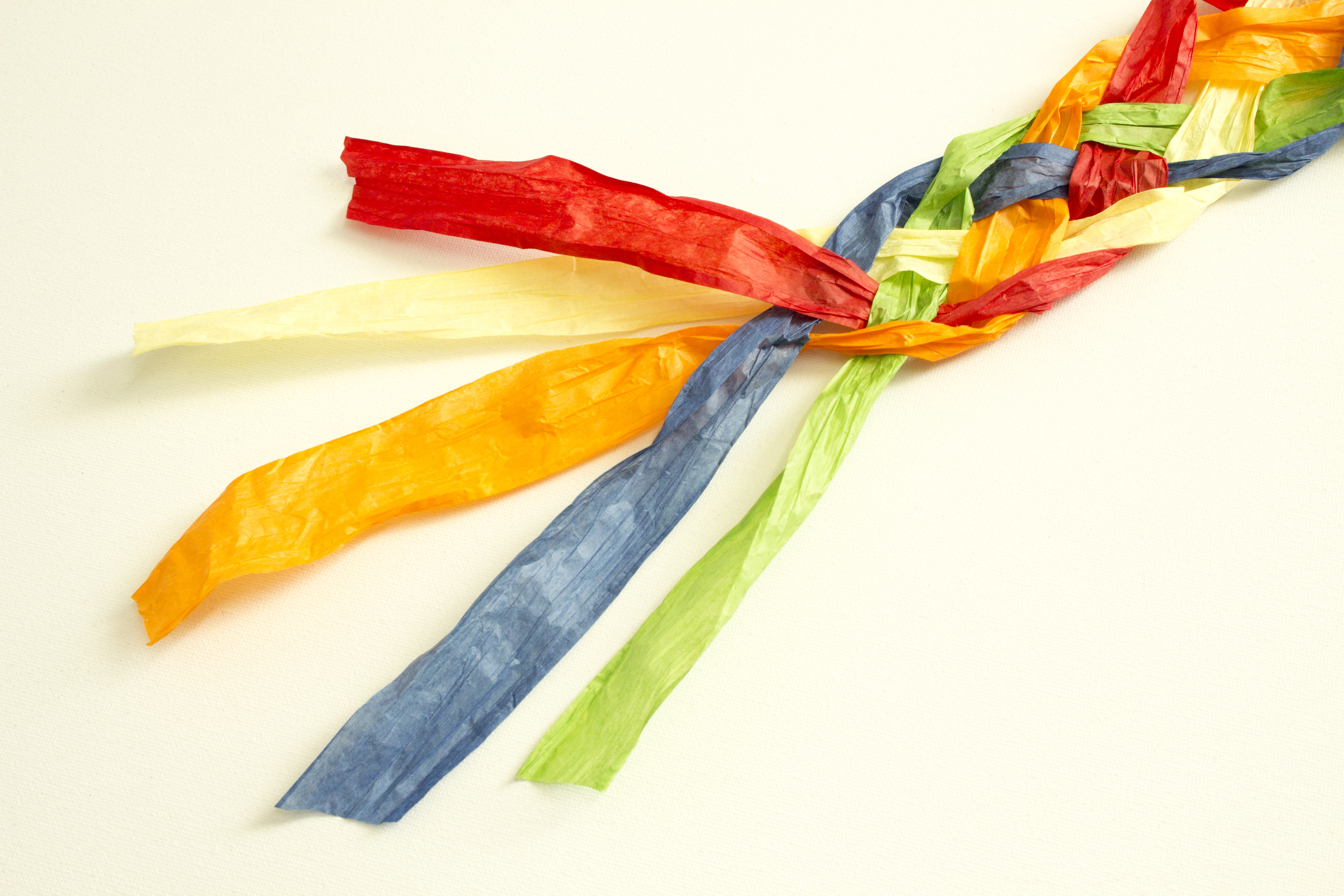
My colleagues on the grants team visited sunny Puerto Rico for the National Women’s Studies Association Conference in November, where Program Officer Sharon Burney took this beautiful photo. In this period of reflection and renewal, I’m feeling grateful not only for my colleagues but for the whole GLAM community, who continue their work to preserve, organize, and enrich the cultural record in the face of unprecedented challenges. On behalf of CLIR and DLF, I wish you all joyful and restorative holidays, and look forward to meeting again in 2026.
–Lizzi Albert, Community Relations Manager
Dr. Synatra Smith, former CLIR Postdoctoral Fellow in Data Curation, sat down with Christa Williford, CLIR’s Senior Director of Research and Assessment, to chat about her fellowship, her career, and current projects. This interview was conducted in June 2025. Content has been lightly edited for clarity.

Tell us about your CLIR postdoctoral fellowship. You were a joint fellow at the Philadelphia Museum of Art (PMA) and Temple University Libraries.
I did a lot of different things in terms of digital library and digital archival skills. It started with a Wikidata project where I was updating the Wikidata pages for Black artists in the [Philadelphia Museum of Art]’s collection. And in order to do that I would write a blog post that had a citation list, and then cite the blog post. It helped create a stronger relationship between the artist and PMA, and also provided an opportunity to show where I got all the information about the artist. We also ended up doing a joint project between the two institutions, a joint Wikidata “editathon,” and brought in some Wikipedia editors to help with that. So we did a lot of work with Wikimedia. And then eventually this evolved into more of an extended reality (XR) experience. So I made an augmented reality mobile app for the iPhone about public art by Black artists throughout the city. Philadelphia is known as “Mural City,” so I also worked with Mural Arts Philadelphia on that, and I worked a lot with the African art collection that is at the Charles L. Blockson Afro-American Collection that’s a part of Temple University Libraries.
Next, I turned a Black woman-owned bookstore in Philadelphia named Harriet’s Bookshop into a VR environment. Basically, I went and took measurements, created it, learned how to use the 3D modeling software in the process and then used Unity to build an actual VR experience that’s interactive and everything. It brings in a lot of the research I did with the Black artists in the PMA collection, the public art, the Charles L. Blockson Afro-American Collection objects, and African art from the PMA as well. So a lot of little different pieces to make this dynamic experience, and really just to see what’s possible in VR when it comes to museum collections.
How did your experiences as a fellow shape the direction your career has taken?
My, my, my! I still think to myself, I am so happy I did this fellowship because it completely changed everything. I had just been working in the education department of a small Black museum in Maryland, and now I work for the State of New Jersey. I’m a project manager for the historical markers that are going up at Black heritage sites throughout the state. But one thing I got to bring with me is the augmented reality skills. So we are doing something called a virtual museum with select sites. A lot of our sites are tied to an actual institution, a museum or something like that. But a lot of them are also just–there’s no building. There’s nothing there. It’s just going to be a historical marker to say what was here. So we’re activating those sites with more information by creating a mobile, augmented reality experience. You just scan a QR code that’s attached to the marker pole, and it launches the augmented reality experience. We’re calling the collection of these augmented reality experiences a “virtual museum.” We did our first one already with the Franklin Street School down in Cape May, New Jersey, which was a Black school because of segregation. And now it’s a library. So they’ve got a small exhibit there, but we also did this AR experience attached to the marker pole. So I’m working on those.
Then, even bigger than that, [my former fellowship colleague] Portia [Hopkins] and I have created a business with another colleague of ours. We’ve been able to do research projects initially, and we’re wrapping up a couple of those now. But we’ve come to realize that what we really love is activating spaces with research and extended reality. So we were working with the Pauli Murray Center down in Durham, North Carolina, and we did a speculative scrapbook which was really cool to bring Pauli Murray’s oral history to life through visual means that included actual archival photos, but also photos that are either AI-generated or something like that, just to kind of bring the experience to life a little bit more, because, of course, there’s not visual documentation of everything. We also created a “choose your own adventure” interactive fiction experience. And I was able to learn how to do that because–thanks to the postdoc–I participated in Dream Lab at University of Pennsylvania twice…and [in] the second [session] I did creative coding, and we learned about Twine. So I was able to take that skill into that project.
We also did some other stuff that’s a little bit more analog. We’ve come to the understanding that there are people who are interested in technology and people who are not–different learning styles. So we kind of try to make sure that our approach is multi-generational, that it includes no tech, mid tech, and high tech: high tech being VR, no tech being obviously things that have nothing to do with technology, and everything in between.
Now, we’re expanding into looking for other opportunities to do this work in other projects. I’ve kind of fallen in love with this type of work. So I’m looking for many, many more opportunities to do this down the road.
Is there any other project that you’re working on that’s really exciting to you right now?
There is. We just started working on this project. There’s not a whole lot to say about it yet, but we are working on processing and digitizing the Congressional papers for the late Congressman John Lewis, which is really, really exciting, and we found out about this project because Jenn [Garçon], who was our postdoctoral mentor, found out about it, and asked us if we were interested. So it still was like CLIR helping us along the way. It’s been a phenomenal ride, to say the least.
I also ended up getting an award in 2022, from the Association of African American Museums. It’s called the Pace Setter Award, and it’s for folks within the first 10 years of their career who are doing amazing things in the Black Museum field. While I had already been in the field a couple of years before starting the postdoc, I think my work with the postdoc is what really launched me to be eligible for that award, and someone had to nominate me. I still don’t know who nominated me, but whomever it was: Thank You!
Dr. Smith now serves as the project manager for the New Jersey Historical Commission’s Black Heritage Trail.
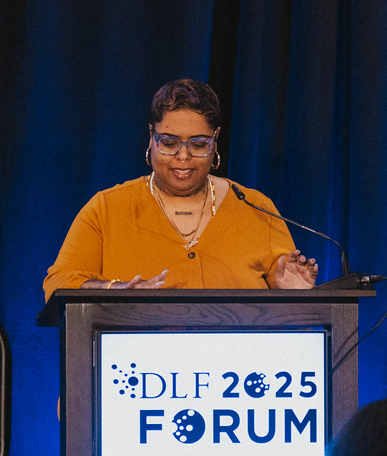
COMING TOGETHER: The 2025 DLF Forum in Denver, CO was a huge success! We welcomed 58 people to Learn@DLF and 319 to the Forum. Watch the recording of Dr. KáLyn Coghill’s keynote address here.
CAUSE FOR CELEBRATION: In October, CLIR announced $3.9 million in funding for sixteen digitization projects through the Digitizing Hidden Collections: Amplifying Unheard Voices program. Forty organizations across fifteen US states and two Canadian provinces will contribute to these projects. See details here.
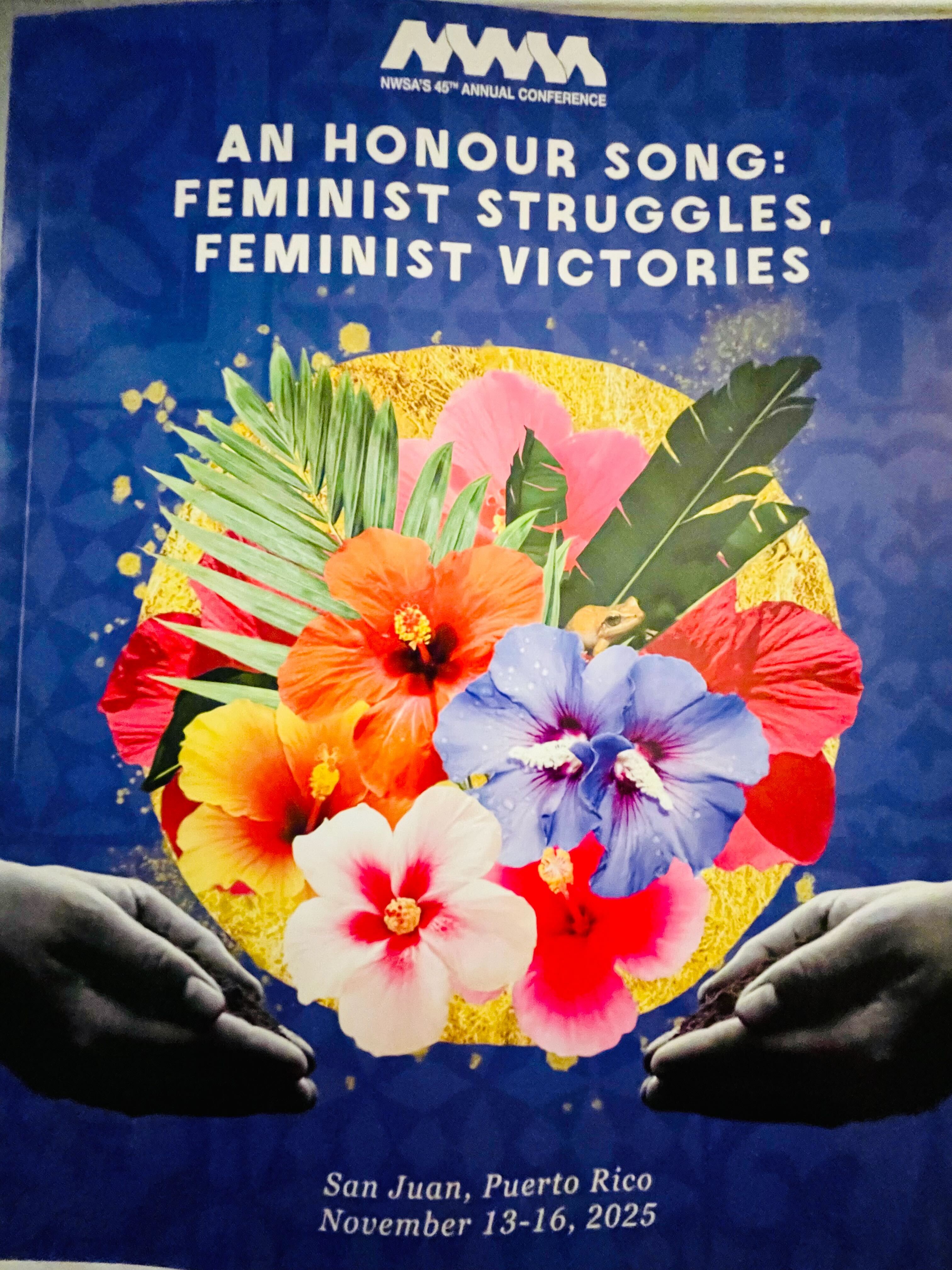
ON THE ROAD: CLIR’s grants team has been hitting the conference circuit, making appearances recently at Reforma, ATALM, NWSA, and AMIA. Look for us next at the OLA Super Conference in Toronto, January 28-31.
ACROSS THE POND: Staff from IIIF-C attended the Fantastic Futures 2025: AI Everywhere, All At Once conference, which took place in London at the British Library, December 3-5. IIIF-C presented a workshop and participated in the lightning talk session.
MAKE YOUR VOICE HEARD: IIIF’s Implementation Survey is open through December 31. The aim of this survey is to get data on current usage of IIIF, understand the levels of implementation for the different IIIF APIs, and identify topics for future workshops and training opportunities. Take the survey.

IIIF Consortium
The IIIF-C 2026 Online Meeting will take place January 27-29 and is free to attend. The Online Meeting is intended for a wide range of participants and interested parties, including digital image repository managers, content curators, software developers, scholars, and administrators at libraries, museums, cultural heritage institutions, software firms, and other organizations working with digital images and audio/visual materials. Registration is available here.
Caitlin Perry (IIIF-C Communications and Community Coordinator) represented IIIF-C at Museum Computer Network (MCN) 2025 in Minneapolis, October 20–22, and coordinated a IIIF meet-up as part of a reinvigorated MCN IIIF Special Interest Group.
At the recent iPRES 2025 conference, which took place November 3-7 in Wellington, Aotearoa, New Zealand, IIIF-C Technical Coordinator Glen Robson led an interactive workshop, “Hands on with IIIF: A Pillar in Digital Preservation.”
Martin Kalfatovic (IIIF-C Managing Director) and Olga Holownia (IIPC Senior Program Officer) presented a collaborative showcase session at iPRES that focused on how both organizations navigate the challenges and rewards of international partnerships. The showcase also featured presentations from a number of IIIF-C and IIPC partner representatives.
IIPC and Web Archiving at iPRES 2025
In addition to the joint showcase session, iPRES 2025 featured several events organized and presented by IIPC staff and members. IIPC Senior Program Officer Olga Holownia led two workshops (“Web Archiving Collections as Data” and “Jupyter Notebooks for Providing Access to Digitized and Born-Digital Collections”) and a panel (“From Silos to Strategy: Aligning Web Archiving and Digital Preservation”). Among the IIPC member-led sessions were Hands-On High-Fidelity Web Archiving with Browsertrix (Ilya Kreymer, Webrecorder, and Gillian Lee, National Library of New Zealand); Unlocking Web Histories: Leveraging LLMs and RAG to Transform Discovery in Web Archives (Corey Davis, University of Victoria); and Bit Preserving Non-Web Standardized Metadata using Web Archive Standards and Technologies (Eld Zierau, Royal Danish Library).
CLIR Issues is published bimonthly, but to stay informed of program-specific news in real time, make sure you’re subscribed to: